Oak Processionary Moth
During the months of May, June and July, the oak processionary caterpillar is active. The caterpillar is expanding its range further and further north. The oak processionary caterpillar has fire hairs that can cause health problems for people and animals. Therefore, it is important to avoid and control the caterpillars. You can help spot the oak processionary caterpillar.
Caterpillars on municipal land are removed by the municipality upon notification.
If you find oak processionary caterpillar nests on your own property, the cost of having them removed is yours. You can find several companies on the Internet that will remove these nests for you for a fee. The municipality does not remove the nests. Removal is not mandatory.
Have you spotted the oak processionary caterpillar? Then report it digitally via Fixi or by calling 14 0511.
Learn more about the caterpillar
On the GGD website you can find information about health complaints the caterpillar can cause and how to prevent complaints. For more information, you can also contact GGD Fryslân by phone at 088-22 99 222.
More information about the oak processionary caterpillar and how to recognize it can be read on the website of Processierups.nu, on the website of the National Institute for Public Health and the Environment (RIVM) and the Dutch Food and Consumer Product Safety Authority (NVWA).
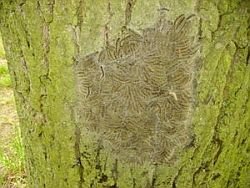
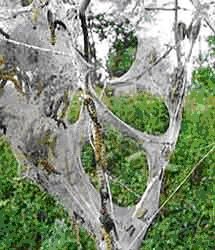
Not all groups of caterpillars are oak processionary caterpillars. The photo on the left shows the oak processionary caterpillar; on the right is the spider moth.