
Species Management Plan for Tytsjerksteradiel
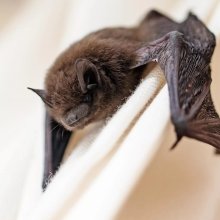
The municipality of Tytsjerksteradiel is home to various protected species, such as bats and birds. These animals are protected by Dutch and European law because they are vulnerable and under threat. This is due, in part, to the fact that their habitats are shrinking or being disrupted. Nevertheless, these animals are important for a healthy environment, for example because they eat insects and help maintain the balance of nature.
Some protected animals also use buildings as shelter. For example, they live in homes, schools, and offices. We often don’t notice this because the animals hide well—for example, in cavity walls, under roof tiles, or in other small openings.
When buildings are renovated or remodeled, this can also affect these animals. For example, they often lose their homes or do not survive the construction work. That is why it is important to know which protected species are present in the municipality and where they live. This way, their needs can be taken into account during construction work.
Species Management Plan for Tytsjerksteradiel
Their habitats are documented in a species management plan (SMP). This plan also identifies which species are found in our municipality and what measures are needed to prevent and/or compensate for harm to animals and their habitats.
Normally, the responsibility for complying with nature conservation regulations lies with residents and construction companies. Through the species management plan, the municipality aims to assume and share part of this responsibility. This is helpful because it means residents no longer have to conduct extensive nature surveys themselves for every renovation project.
We expect to officially have an SMP starting in 2026. Until then, the so-called “pre-SMP” will be in effect.
What is a pre-SMP?
Our municipality is now using a pre-SMP: a temporary arrangement that Requirements isolation in accordance with Requirements while a comprehensive Species Management Plan (SMP) is being developed. This makes isolation easier. You no longer need to hire an ecologist as a matter of course to conduct a comprehensive ecological survey when you want to isolate an area from the outside. You also no longer need to apply for a permit from the province for certain types of work.
Field research
In order to develop a species management plan, it is first necessary to know where the protected animals live. To this end, the municipality is conducting field research this year.
What is field research?
In field research, ecologists (field staff) go out into the field to investigate which animals are found in the municipality and which areas they use. For example, they look at:
- where bats sleep and raise their young
- where birds nest
- which routes animals use, such as flight paths
- where animals look for food
This research is conducted carefully and in accordance with national guidelines and established research methods.
How has the study affected you?
The field research takes place in the residential areas of the municipality of Tytsjerksteradiel and is conducted throughout the year. Field workers search for various animal species on foot or by bicycle. This can take place during the day, in the evening, or at night, depending on the animal being studied.
To be able to identify animals clearly even in the dark, the researchers use thermal cameras, bat loggers, and bat detectors. This equipment allows them to hear—and sometimes even see—bats. This is how they determine where the bats are located and what species they belong to.
Field researchers may suspect that bats are living in or near a home. In that case, they will stay near the home a little longer to listen and see if this is indeed the case.
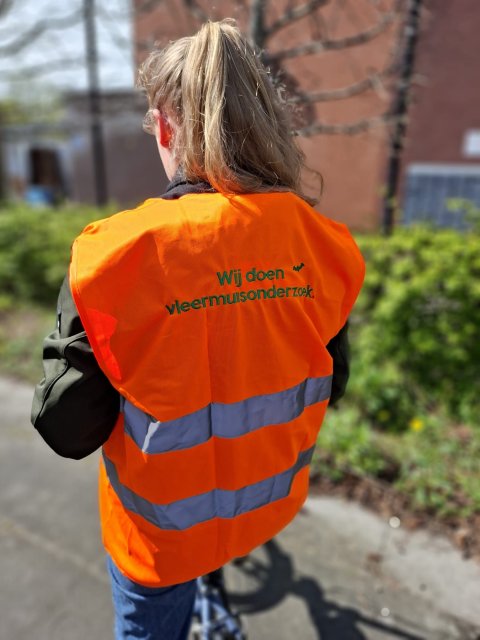
How can I recognize the field staff?
Please note: field researchers never enter homes.
Field staff are always easily recognizable by their work uniforms, which feature the Witteveen logo.
Questions?
Do you have any questions about the species management plan or the field research? Feel free to send a message to biodiversiteit@t-diel.nl.
Nature-friendly insulation
When insulating cavity walls or roofs, small birds and bats are often killed unnecessarily. Nature-Friendly Insulation makes it possible to protect both biodiversity and the climate.